HBD empowers a student-led rocketry team to turn complex designs into flight-ready reality.
In aerospace, reliability and weight are everything. Recently, HBD and Elara Aerospace gGmbH partnered to produce a high-performance injector head for the “Starlight” reusable launch vehicle using HBD’s metal Laser Powder Bed Fusion (LPBF) technology.
Addressing Real-World Engineering Challenges
Elara Aerospace unites students and young professionals to develop a 28 kN electric pump-fed rocket engine. They needed a manufacturing partner to turn cutting-edge designs into functional components. HBD provided the industrial-grade LPBF solution to meet these demands.
Case Focus: The Injector Head
The injector head is the heart of the engine, mixing fuel and oxidizer and handling ignition. The engine requires throttling down to 50% and relight capabilities, posing extreme challenges for thermal management and precision.
Why CuCrZr Material and LPBF Technology?
- Material Solution: To survive intense combustion heat and re-entry, the injector head needs efficient cooling. CuCrZr was selected for its high thermal conductivity and superior strength over pure copper. Cryogenic fuel flows through internal channels to cool the injector face and prevent melting.
- Production Solution: The complex internal channels are impossible to make with conventional methods. LPBF enabled the team to reduce wall thickness based on pressure simulations and apply an isogrid optimization – critical steps for weight reduction that traditional machining cannot achieve.
Design Highlights at a Glance
- 52 custom-designed swirl injectors for efficient atomization.
- Central torch igniter integration for relight capability.
- Throttleable to 50% of nominal thrust.
- Integrated internal cooling channels.
- Simulation-driven, isogrid-optimized thin-wall structures.
HBD 400: Turning a Complex Design into a Flyable Part
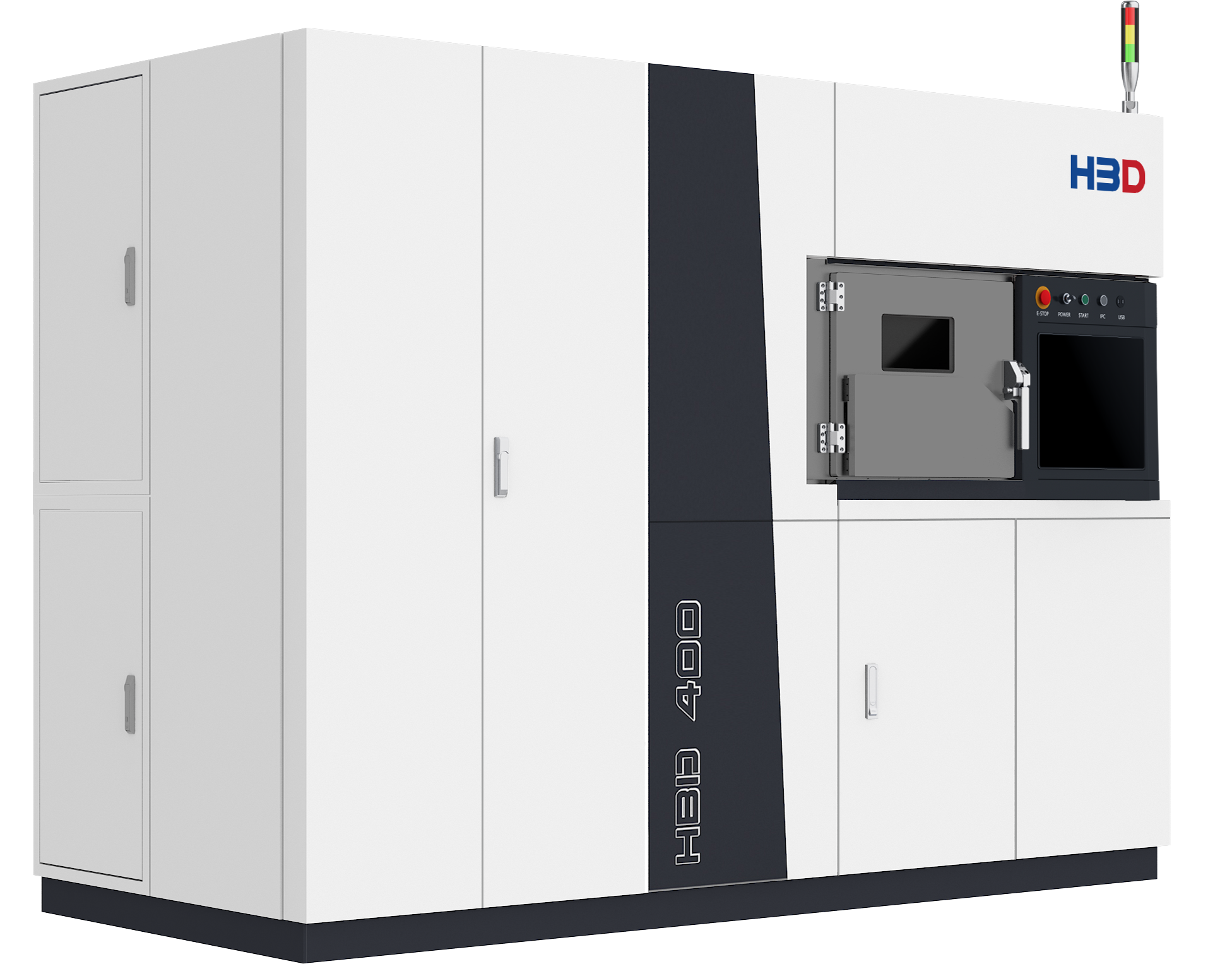
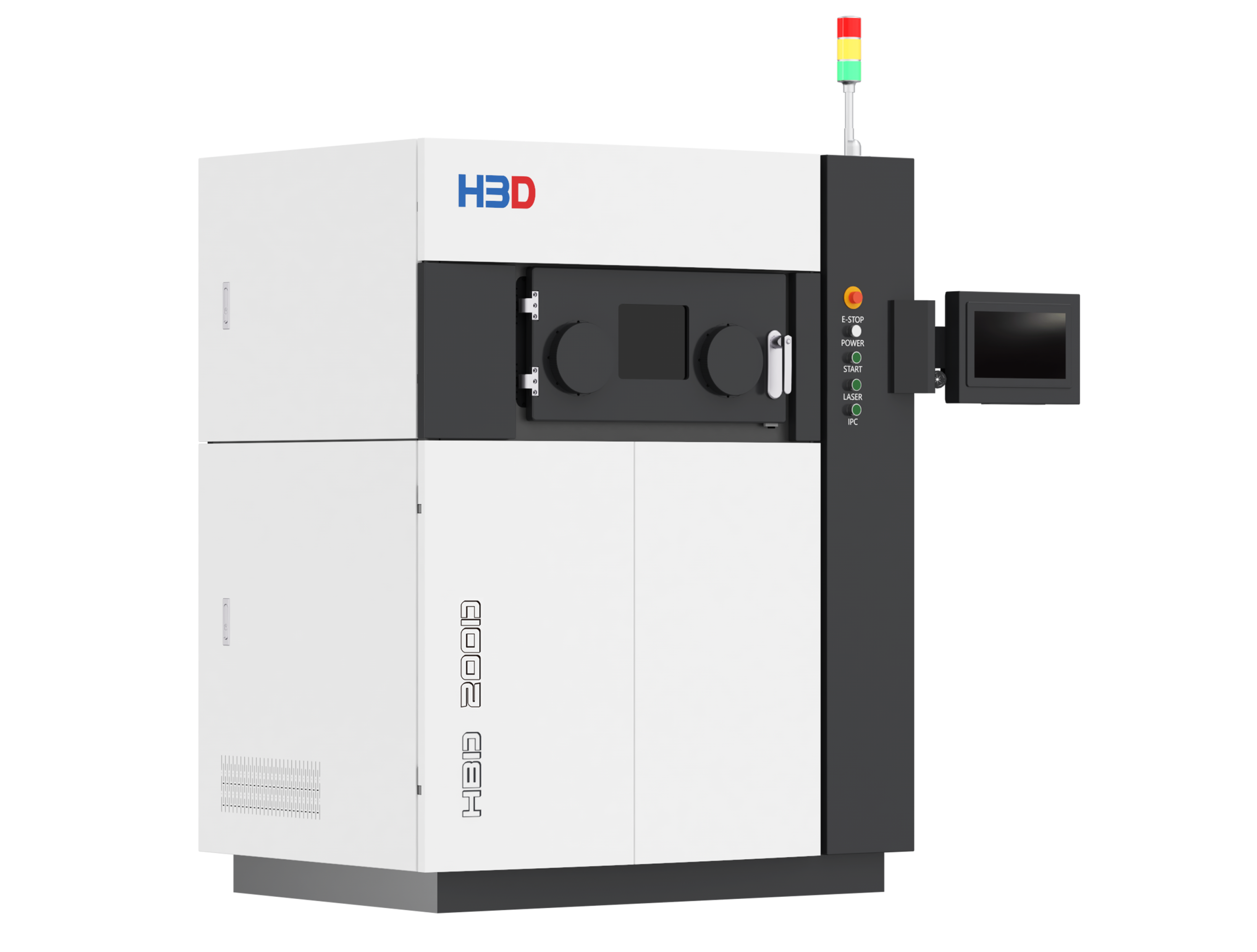
The injector head was printed on the HBD 400 metal LPBF system. For a rocket team like Elara, what matters is not the spec sheet – it’s whether the machine can turn a design file into a usable part consistently.
The HBD 400 offers a build volume of 350×400×400mm, multi-laser configuration, typical accuracy of 0.05-0.2mm, relative density above 99.9%, and oxygen content below 100ppm. It supports common aerospace materials including copper alloys, superalloys, and titanium alloys.
In this project, the real value lies in solving several practical pain points that aerospace teams often face:
No more splitting and welding for internal channels. Conventional methods would require the cooling passages and swirl structures to be made as separate parts and then welded together, introducing leak risks and tolerance stack-up. LPBF builds the injector head as a single piece, removing those weak points.
- CuCrZr can be processed reliably. Copper alloys are notoriously difficult to machine due to high thermal conductivity and laser reflectivity. The HBD 400’s process parameters are tuned for thermal-management parts like this, reducing trial-and-error.
- Thin-wall isogrid structures become producible. Simulation-driven lightweighting is no longer constrained by “can we machine it?” – the design can follow performance and mass targets directly.
- Fast iteration for low-volume validation. Student teams and early-stage space projects typically need one good part quickly, not mass production. No tooling is required; a revised CAD file can go back to the printer in days, closing the loop between hot-fire tests and redesign.
For aerospace users, the benefit of metal AM is not simply replacing CNC. It’s about converting parts that used to be segmented, welded, and inspected into monolithic structures – reducing leak paths, shortening development cycles, and improving thrust-to-weight ratio and reusability.
HBD has already demonstrated large-format LPBF capability on complex propulsion hardware, such as the 200 kN aerospike engine developed with LEAP 71. The Elara injector head applies the same manufacturing logic to a smaller engine core component – giving an academic team access to an industrial-grade production chain, so the design can actually reach the test stand.


 English
 Spanish
 French
 German
 Japanese
 Korean
 Italian